
Resin selection
PP, PE, ABS, PA or PS — selected around the application and the demands of your product.
Injection moulding turns a product idea into a repeatable plastic form. The right polymer, tooling and production plan make the difference.
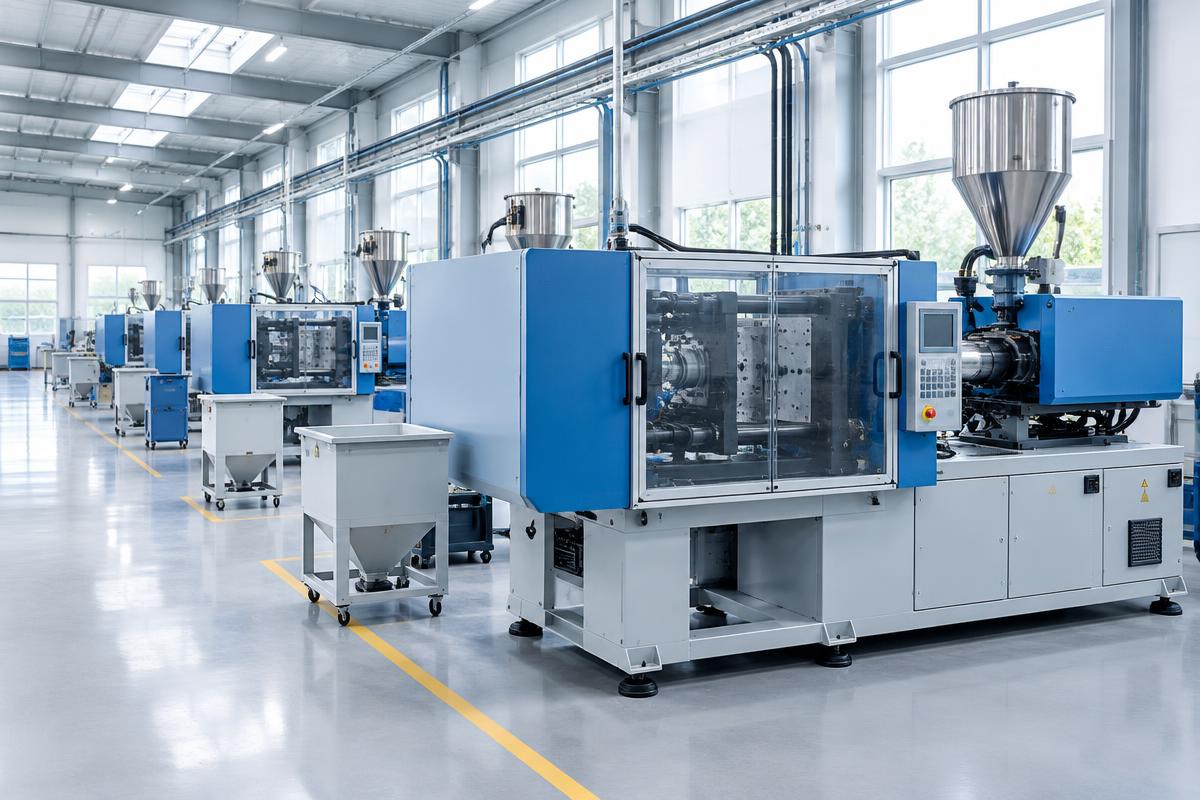
Project requirements guide the process — including material grade, geometry, inspection and packaging.
PP, PE, ABS, PA or PS — selected around the application and the demands of your product.
Prepared polymer takes shape in the mould, then cools into a precisely formed component.
Finishing and inspection bring the details together, from the edges to the final fit.
Packaging and delivery requirements are agreed around your product and production run.
These are common polymer families. Final grades, additives and compliance requirements are specified for each project.
A versatile polymer commonly used for containers, trays and living hinges.
A tough, versatile material often selected for containers and outdoor applications.
Often selected for rigid housings and components with a refined surface finish.
An engineering polymer commonly used for gears, clips and wear-resistant parts.
A rigid polymer used in selected household and packaging applications.
Share the application, drawing and expected quantity to start a project discussion.
Discuss a project